
Uncategorized
Touching Base: How MLB Teams Are Safeguarding Their Stars During the World Baseball Classic
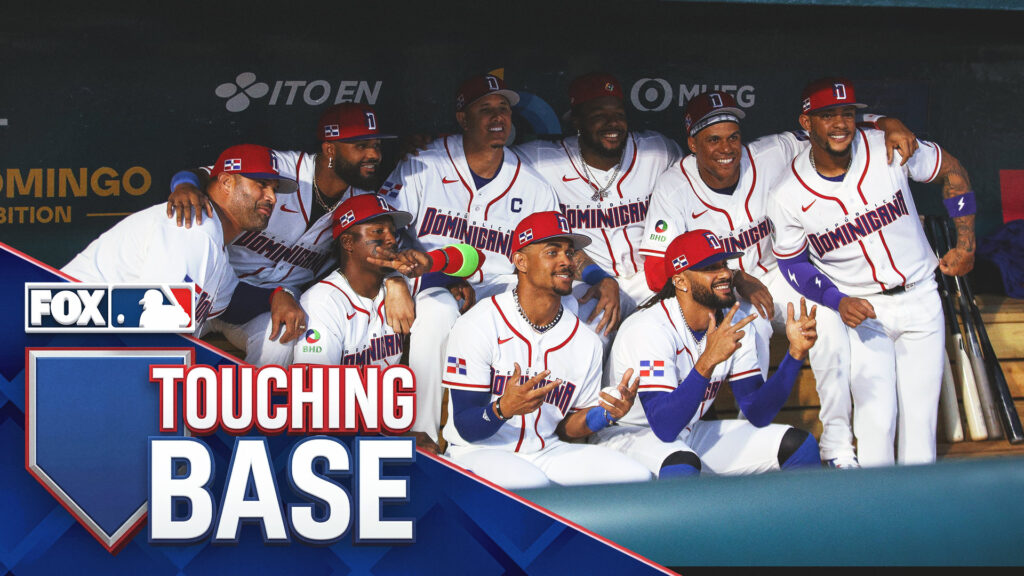
Mar
It was a scene that defined the 2023 World Baseball Classic. In Miami, the atmosphere was electric as Team Puerto Rico faced off against the Dominican Republic. On the mound, Edwin Díaz was locked in a grueling 10-pitch battle with Teoscar Hernández. With a sharp inside slider, Díaz caught Hernández looking, sending Puerto Rico into the quarterfinals and the stadium into a frenzy.
As his teammates poured out of the dugout, the celebration was pure euphoria—a sea of players hopping in joy around the mound. But in a split second, the cheering stopped. Amidst the revelry, Díaz collapsed, clutching his knee. What should have been a career highlight turned into a nightmare: a torn patellar tendon that sidelined the world’s most dominant closer for the entire 2023 MLB season.
It remains one of the most bittersweet moments in international baseball history—a reminder of how quickly the game we love can take a turn.
Three years later, the fluke injury has not deterred him from returning to the competition, especially with his country set to host Pool A in San Juan starting March 6.
“That was an easy decision,” Díaz said. “It’ll be my first time playing in front of my people in Puerto Rico, so that was an easy ‘yes’ when I knew the WBC was going to be there.”
The devastating injury to Edwin Díaz serves as a stark reminder of the risks involved in high-stakes international play. Consequently, securing clearance for the World Baseball Classic has become a much steeper uphill battle for many of MLB’s elite.
Take Puerto Rico’s own Francisco Lindor and Carlos Correa, for example. Despite their desire to represent their home soil in San Juan, both standouts were notably absent from the roster after failing to secure the necessary insurance. It’s exactly why MLB managers across the league are still holding their breath; seeing their multi-million dollar investments competing at 100% intensity just weeks before Opening Day is enough to keep any front office up at night.
“We want our players to play well and want them to show off,” said Padres manager Craig Stammen. “The other part, it’s all in the back of our heads, we want them to stay healthy and be ready for us, not have a catastrophic injury that sometimes happens in the WBC.”
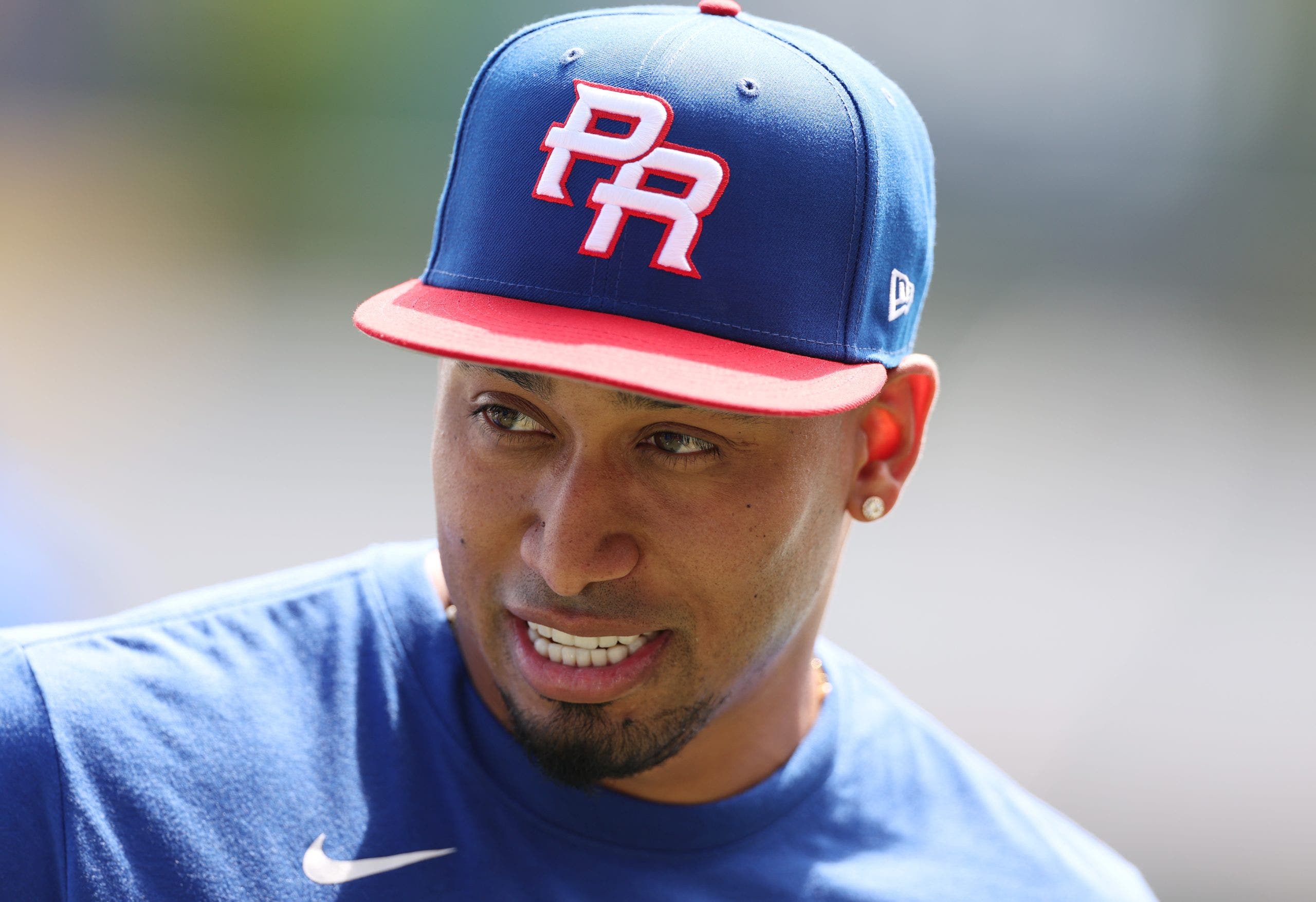
Edwin Diaz is ready to roll for Puerto Rico at the WBC.
The Díaz injury was the most significant one in 2023, though Jose Altuve also missed the first 43 games of the regular season that year after fracturing his thumb when he was hit by a pitch in the WBC. Altuve only played in 90 games that year, marking the only full season since 2012 in which he has played fewer than 120 games.
While Edwin Díaz’s 2023 injury was the most shocking, he was far from the only victim of the “WBC curse” that year. Jose Altuve also saw his season derailed before it even started. After fracturing his thumb on a hit-by-pitch during the tournament, Altuve missed the first 43 games of the regular season. He finished the year with only 90 appearances—the only time since 2012 (excluding the 2020 shortened season) that he failed to play at least 120 games.
History shows this isn’t a new trend. Back in 2017, the legendary Miguel Cabrera suffered a back injury during the Classic. He spent the rest of the year playing through significant pain, resulting in what was, at that point, the worst offensive season of his storied career.
For pitchers, the danger is often invisible. The physical toll of “ramping up” for high-leverage innings in March can lead to delayed disasters. A prime example is Drew Smyly in 2017. After a dominant 8-strikeout performance against Venezuela on March 17, the cracks began to show. Two weeks later, he was diagnosed with a flexor strain. That diagnosis eventually led to Tommy John surgery, and Smyly never threw a single pitch for the Mariners that entire season.
In 2023, Shohei Ohtani and Sandy Alcántara both started the year pitching in the WBC and ended it undergoing Tommy John surgery. It’s impossible to know with any certainty if the early start led to the end result, but it’s another example of why teams worry more about pitchers than position players in the event.
“That’s not a WBC thing,” Cubs manager Craig Counsell clarified, “that’s an everyday thing.”
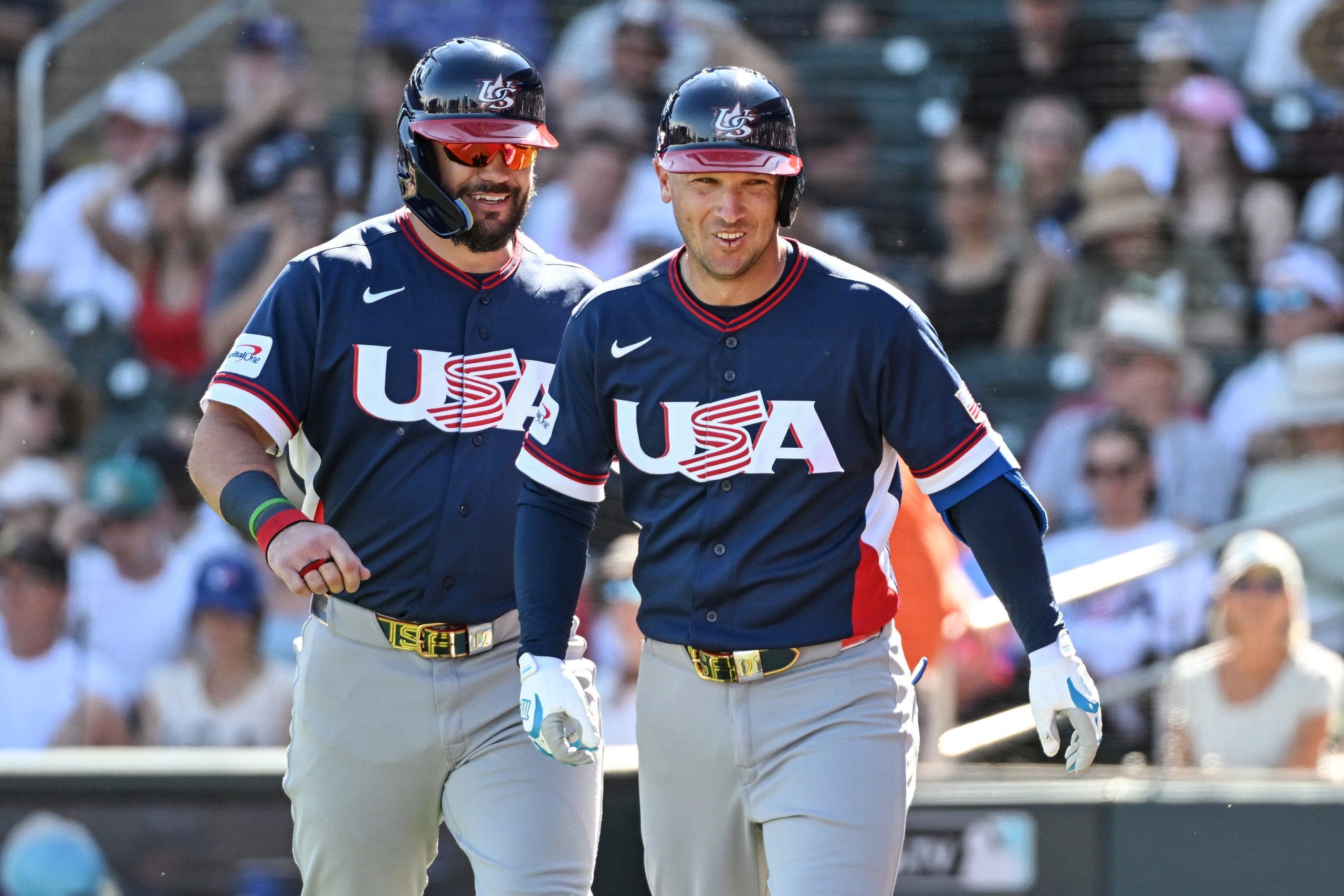
Kyle Schwarber and Alex Bregman are part of a star-stacked Team USA squad.
Counsell noted that the WBC is a thrilling event for players who get to play deep into the tournament, and all he is worried about is that his players who are participating — there are many from the Cubs, with Alex Bregman (USA), Pete Crow-Armstrong (USA), Matthew Boyd (USA), Seiya Suzuki (Japan), Javier Assad (Mexico), Daniel Palencia (Venezuela), Miguel Amaya (Panama) and Jameson Taillon (Canada) all going — take ownership of their preparation.
“Because you don’t necessarily have the whole organization structuring everything quite the way they would if you were in your team’s camp,” Counsell explained. “That’s really the onus that kind of falls on the players.”
In addition to Fernando Tatis Jr., Manny Machado and Wandy Peralta playing for the Dominican Republic, Xander Bogaerts playing for the Netherlands and Ron Marinaccio playing for Italy, the Padres will also be sending Mason Miller, the star of their esteemed bullpen, to close out games for Team USA.
Long before the first pitch was thrown in the World Baseball Classic, a sophisticated game plan was already in motion for Mason Miller. This wasn’t just a “good luck and see you later” situation; it was a masterclass in professional collaboration.
Weeks before players departed, Padres pitching coach Ruben Niebla was in constant dialogue with Team USA’s Andy Pettitte to map out Miller’s specific usage. The Padres’ front office and Miller himself remained in a “continuous loop,” ensuring his physical build-up for the marathon MLB season stayed perfectly on track.
As Craig Stammen put it, the team isn’t pretending to be indifferent: “We’d be lying to you if we weren’t cautious about it and trying to figure out the best way to get Mason ready for that scenario.” Ultimately, the responsibility rests on Miller’s shoulders to communicate his needs to Team USA manager Mark DeRosa and Pettitte. The goal? A delicate balance—getting Miller ready for the 162-game grind while helping Team USA chase another WBC championship.
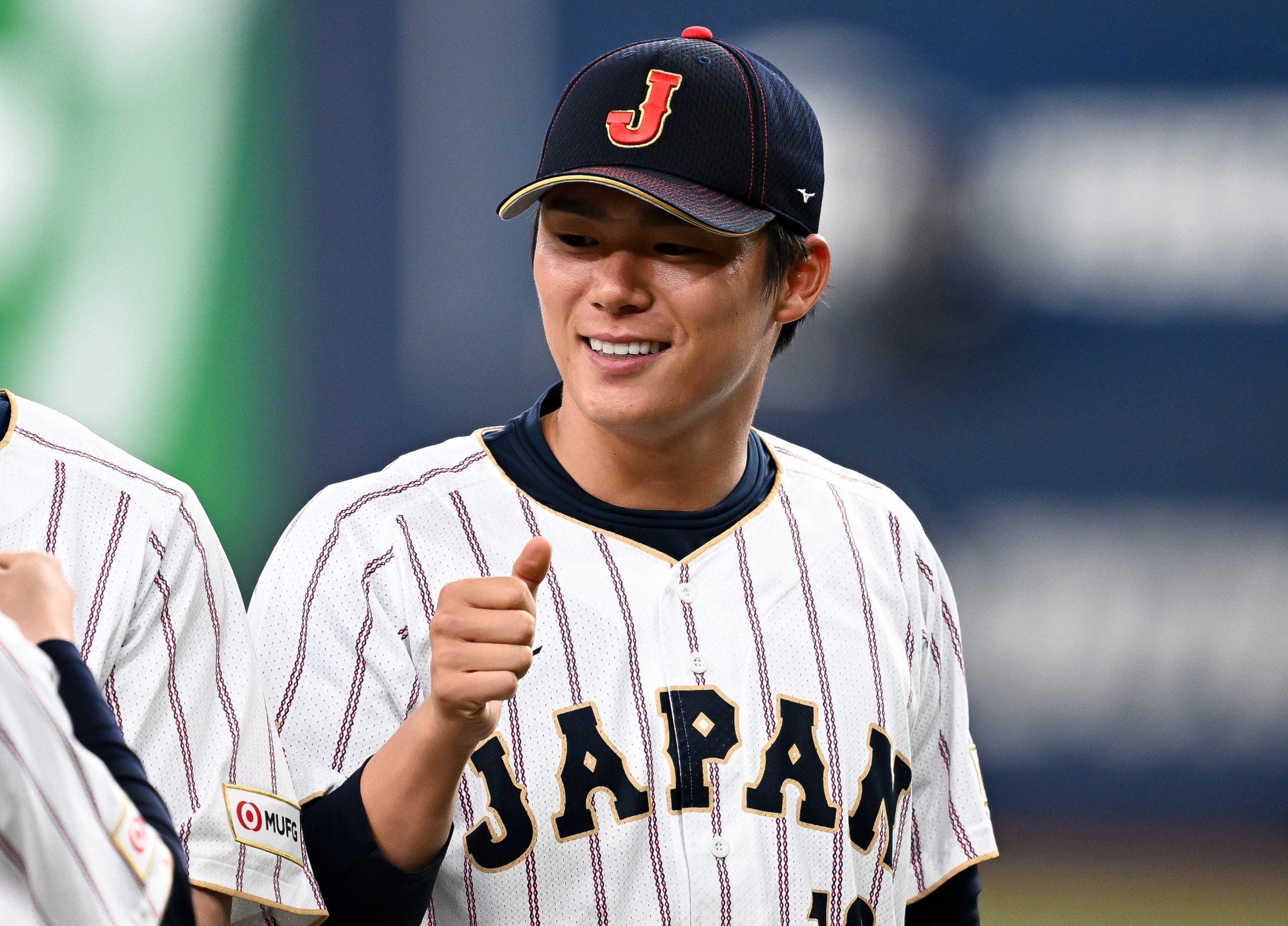
Yoshinobu Yamamoto, the 2025 World Series MVP, will be on Japn duty before returning to the Dodgers.
Díaz, now in his first year with the Dodgers, will be trying to create more positive moments at this tournament with Puerto Rico. The defending World Series champions will also be sending Will Smith to join Team USA, Hyeseong Kim to join Team Korea and Ohtani and Yoshinobu Yamamoto to join Team Japan. Ohtani will only be hitting, which minimizes much of the risk, but Yamamoto will be Japan’s ace fresh off winning World Series MVP honors after throwing 526 pitches in the postseason and pitching on back-to-back days in Games 6 and 7.
“I just know the level of intensity that they will have, and so it’s more just making sure the work up to this point, that we’re putting them in the best positions to go take on that intense atmosphere,” said Dodgers president of baseball operations Andrew Friedman. “It is impossible to tell those guys to dial it back in any way, and nor would I do that.”
Dodgers manager Dave Roberts claims he’s “not too concerned” about Yamamoto because he believes the pitcher will be prepared and understands his limitations, despite the high-pressure, high-intensity, highly-competitive environment that will await.
“Once we all came to the decision that he’s gonna play and participate, I’m just rooting for him to pitch well and stay healthy,” Roberts said. “So I don’t think I’m looking at it any other way.”
Beyond the conversations that MLB teams and WBC managers are having about individual players, the tournament itself provides some protection.
Per WBC rules, pitchers can’t throw more than 65 pitches in a game in the first round, 80 pitches in the second round or 95 pitches in the championship round (unless he needs more to complete an at-bat). In addition, pitchers who throw 30 pitches in a game will need at least one day of rest, and pitchers who throw at least 50 pitches in a game will need at least four days of rest before pitching again. Relievers also won’t be able to throw three days in a row.
“Anybody will tell you anytime you take the mound, whether it’s a spring training game or WBC game, there are risks associated with that,” Giants and Great Britain pitcher Tristan Beck told me. “But I think they do as good a job as they can with pitch limits, days off. They take it pretty seriously, and that makes it comfortable on our end.”
It’s a risk that everyone who is participating is willing to take in order to represent their country in an international competition that continues drawing more eyes and acclaim.
Before he left Dodgers camp to join Puerto Rico again, Díaz was asked if the WBC or World Series meant more.
“I haven’t had the chance to play in the World Series, but I heard people say it’s about the same,” Díaz said. “So when I have a chance to play in the World Series, I’ll tell you guys how it feels.”
2026 World Baseball Classic, Major League Baseball

